Georgetown University Program Selector
DMI
- WordPress
- ReactJS
- Accessibility first engineering
- Headless
Web development, accessibility engineering
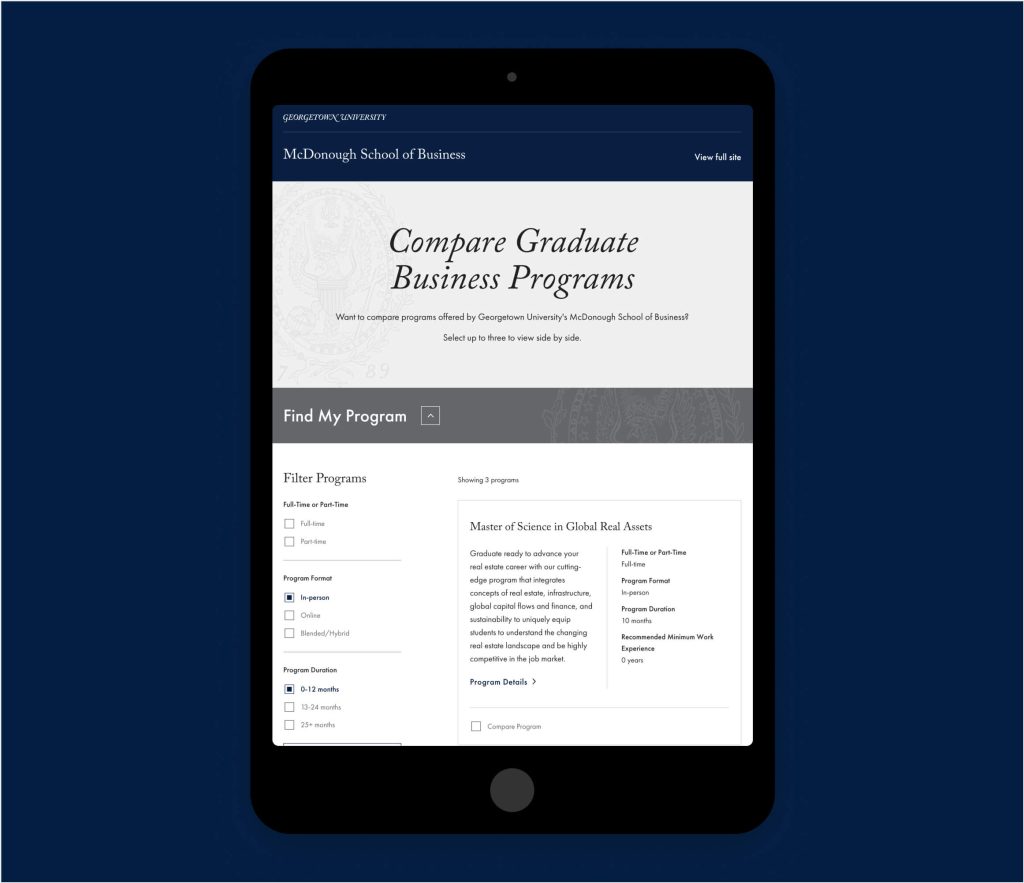
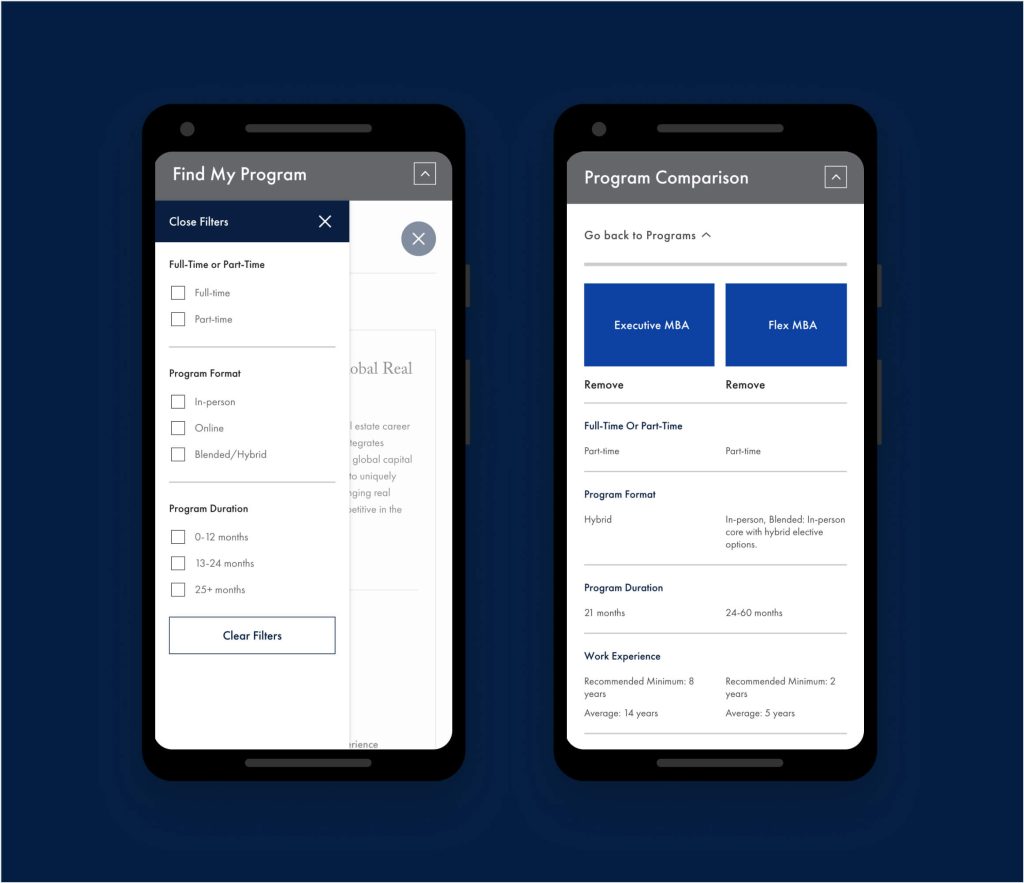
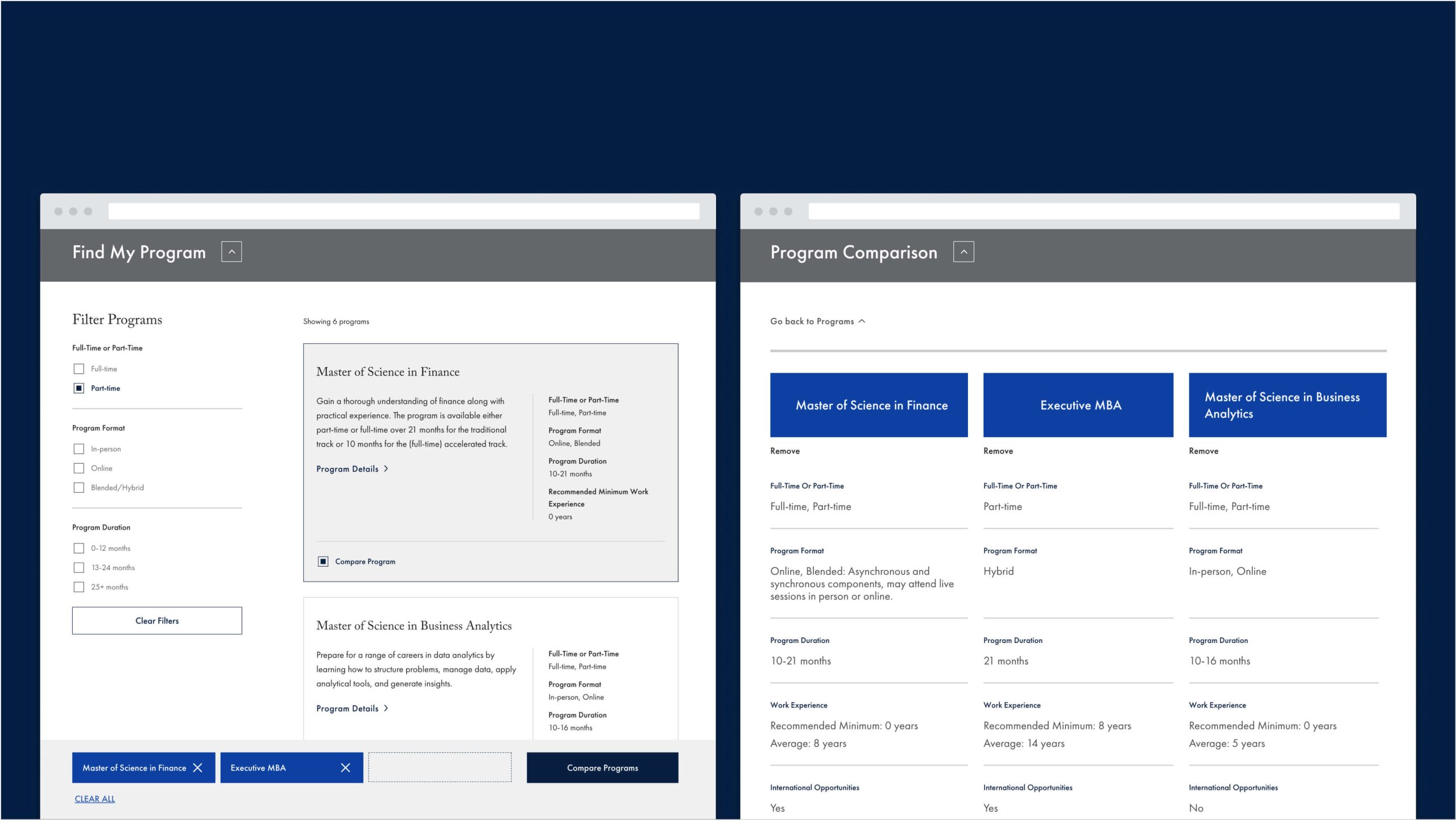
Georgetown University, one of the world’s leading academic institutions, sought a streamlined way to guide prospective students through its wide range of graduate programs. The Program Chooser was designed to meet this need by presenting complex program offerings in a clear, easy-to-navigate format. Built as a headless ReactJS application backed by WordPress, it enables users to filter programs by taxonomy-driven criteria and quickly identify degrees aligned with their career goals. The tool’s primary business objective is to simplify discovery, improve accessibility, and ultimately funnel prospective students toward the application portal, increasing conversions for graduate enrolment.
Our solution
Technology stack
The Program Chooser was implemented in React with TypeScript. It is supported by a headless WordPress backend, which functions as the content and configuration management system. All program data, taxonomies, and administrative settings are retrieved via the WordPress REST API, ensuring that non-technical administrators have full editorial and structural control without direct developer intervention.
Core functionality
The application provides prospective students with a structured way to identify suitable programs:
- Uses a taxonomy-driven filtering system that allows users to select criteria (e.g., area of study, career focus, degree type).
- Dynamically narrows available options in real time based on user input.
- Guides users through the decision flow and ultimately directs them to the application landing portal for formal enrolment steps with funnel tracking.
Accessibility engineering
A defining aspect of this project was the depth of accessibility integration, marked by direct collaboration between the development team and a certified accessibility engineer who was themselves a sensory-disabled end user. Accessibility testing thus went beyond simple simulations and automated tools: in addition to standard screen reader checks (such as JAWS) during initial QA, a bespoke UX QA process was designed by the accessibility specialist, adding criteria that exceeded typical AA/AAA compliance targets. This rigorous process highlighted the practical realities of keyboard navigation and non-visual browsing patterns, guiding adjustments to component structure, focus management, and interaction design.
This collaboration established accessibility as a primary design constraint from the outset, moving it far beyond a simple compliance checklist. As a result, the final user experience (UX) was not only technically compliant but was also robustly validated through testing based on lived experience. Ultimately, the project successfully reshaped internal development practices, cementing accessibility as a key driver for building better, more inclusive interaction models.